
Immediacy
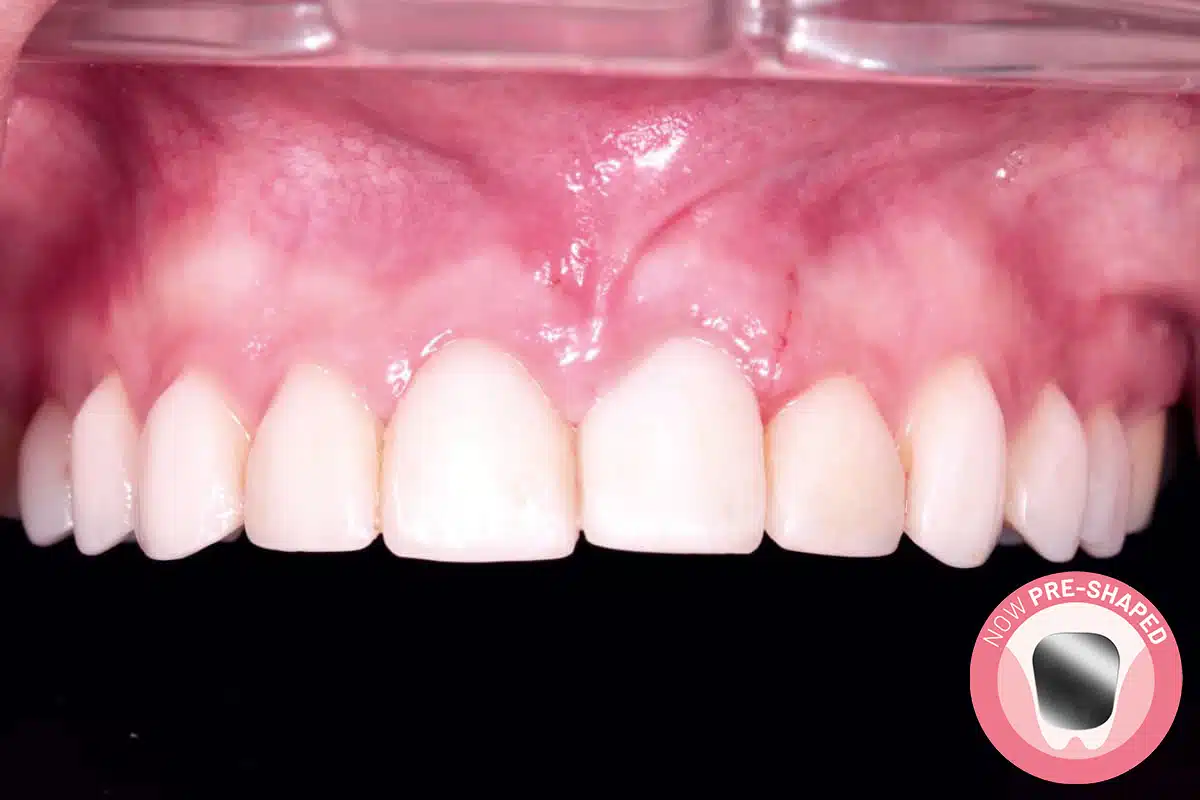
Immediate implant placement refers to insertion of a dental implant directly after tooth extraction. Primary stability of the implant and the condition of the buccal bone are key factors. In favourable cases, immediate placement combined with appropriate socket management may support preservation of the alveolar ridge and aesthetic tissue contours
Immediacy by Socket Type
Immediate implant placement is possible across all three socket types, though the approach and additional support needed differ depending on the condition of the buccal bone.

Socket Typ 1
Buccal Bone Intact
With an intact buccal wall and adequate primary stability, immediate placement is generally straightforward and supports preservation of ridge contour and soft tissue aesthetics.
Suggested approach:
Socket sealing with collafleece® for thick soft tissue biotypes or mucoderm® for thin soft tissue biotypes.
Socket Type 2
Compromised Buccal Bone
Immediate placement is still an option when sufficient primary stability can be achieved, provided the buccal defect is actively supported with grafting or a barrier such as collprotect® membrane or SHIELD.
Suggested approach:
collprotect® membrane: Ice Cream Cone technique
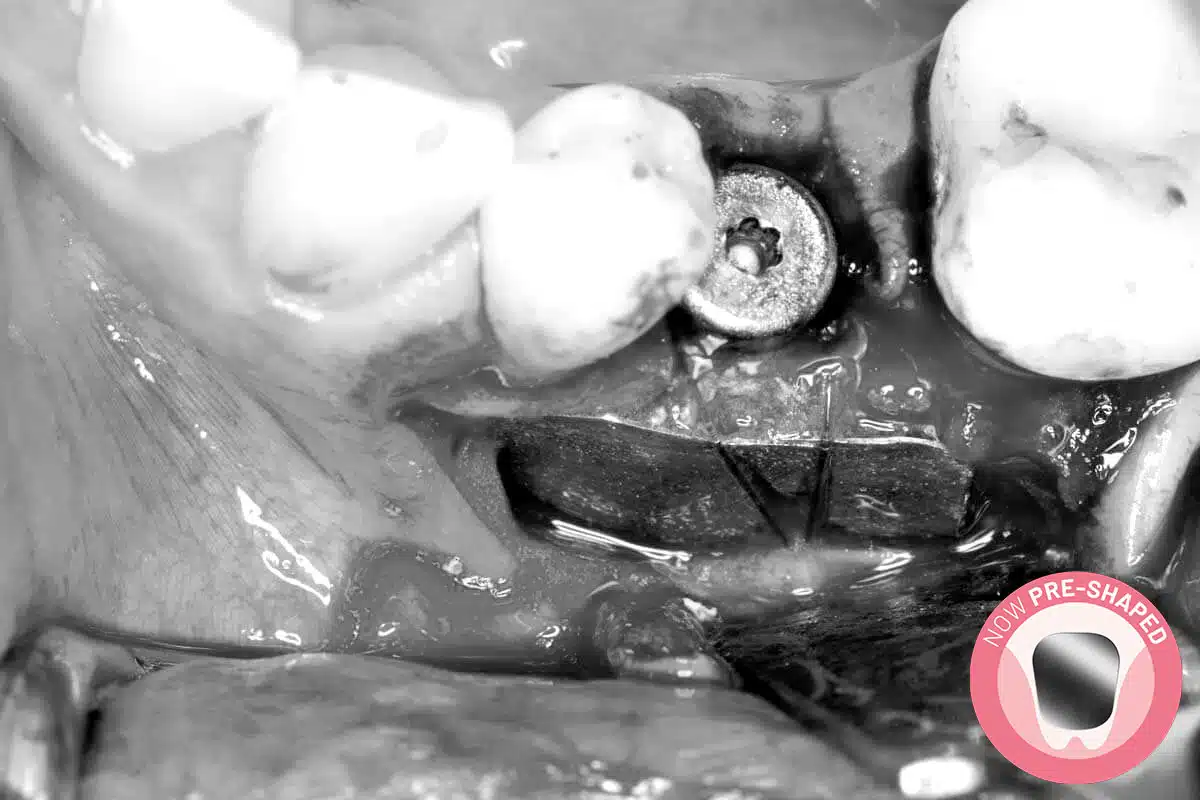
SHIELD: Immediate buccal wall reconstruction


Socket Type 3
Severe Buccal Bone Loss
Traditionally, these defects required a staged treatment approach. SHIELD now enables immediate implant placement by providing instant buccal wall reconstruction and maintaining the regenerative space.
Suggested approach:
Immediate implant placement with simultaneous buccal wall reconstruction using SHIELD.
NOVAMag® SHIELD
Opening New Possibilities for Immediate Implant Therapy
Immediate implant placement is no longer limited by challenging Socket Type 3 defects. With its rigid, resorbable magnesium structure, SHIELD provides temporary buccal wall support, helping to stabilize the graft, maintain the regenerative space, and preserve soft tissue contours throughout healing.
Why SHIELD?
- Enables immediate implant placement even in Socket Type 3 defects
- Provides rigid support where collagen membranes may not be sufficient
- Helps maintain buccal contour and graft stability
- Resorbs naturally, no second surgery for removal

Expand the Indications. Preserve the Benefits.
Turn challenging extraction sockets into candidates for immediate implant therapy with a solution designed to support predictable hard and soft tissue regeneration.
Frequently Asked Questions
Why choose immediate implant placement?
Immediate implant placement can reduce the number of surgical procedures and overall treatment time while helping preserve the natural architecture of the alveolar ridge. By placing the implant at the time of extraction, it may also simplify the treatment workflow and support favourable aesthetic and functional outcomes.
Can immediate implant placement be performed in sockets with severe buccal wall defects?
Yes, in selected cases. SHIELD makes immediate implant placement possible in cases with severe buccal wall defects that traditionally required staged reconstruction. By providing immediate buccal wall reconstruction and maintaining the regenerative space, it supports a one-stage regenerative approach when primary implant stability can be achieved.
How do membranes contribute to successful immediate implant placement?
Barrier membranes stabilize the graft, protect the regenerative site from soft tissue ingrowth, and help maintain the space required for new bone formation. The choice of membrane depends on the defect configuration and the desired regenerative strategy.
Which botiss biomaterials can be combined for immediate implant placement?
Depending on the clinical indication and defect morphology, regenerative therapy may combine bone grafts (e.g. cerabone®+HyA, maxgraft® +HyA), collagen membranes (collprotect® membrane), magnesium-based shield (SHIELD), and soft tissue substitutes (mucoderm®) to address both hard and soft tissue deficiencies. The optimal combination depends on the specific regenerative needs of each case.
Related: Socket Management
Not every extraction socket is suited to immediate placement. Where primary stability cannot be achieved or the socket requires further preparation, socket management strategies help preserve ridge volume and support predictable future implant placement.
Learn more about socket management approaches for Socket Types 1–3 →